
Astro Physics
B-V Photometry
A way to estimate the surface temperature of a star is by using filters. More specifically, in 1953 Johnson and Morgan introduced a system of filters U (Ultraviolet, 364nm), B (Blue, 442nm) and V (Visible, 540nm) called the UBV photometric system. Letting the light of a star to pass through a filter we measure the flux of the passing light and we come up with three numbers FU, FB and FV which correspond to the measured fluxes. By having the fluxes for Blue and Visual Filter we can calculate the B-V index. As many researchers showed there is a relation between the B-V index and the surface temperature of a star. Furthermore, Ballesteros, provided a formula by which someone can estimate the surface temperature using flux data from any two filters of different wavelengths.
B - V = -2.5 log ( FB / FV )
But since the most common photometric system is the UBV photometric system, Ballesteros provided as an example a simple equation from which someone can estimate a star’s surface temperature by using the B - V index.
T = 4600 ( 1 / ( 0.92 (B-V) + 1.7 ) + 1 / ( 0.92 (B-V) + 0.62 ) )
Experiment
Verification of Weins displacemet law ( black-body radiation curve for different temperatures will peak at different wavelengths that are inversely proportional to the temperature ).
Finding the surface temperature of an artificial star (halogen lamp) using b-v index.
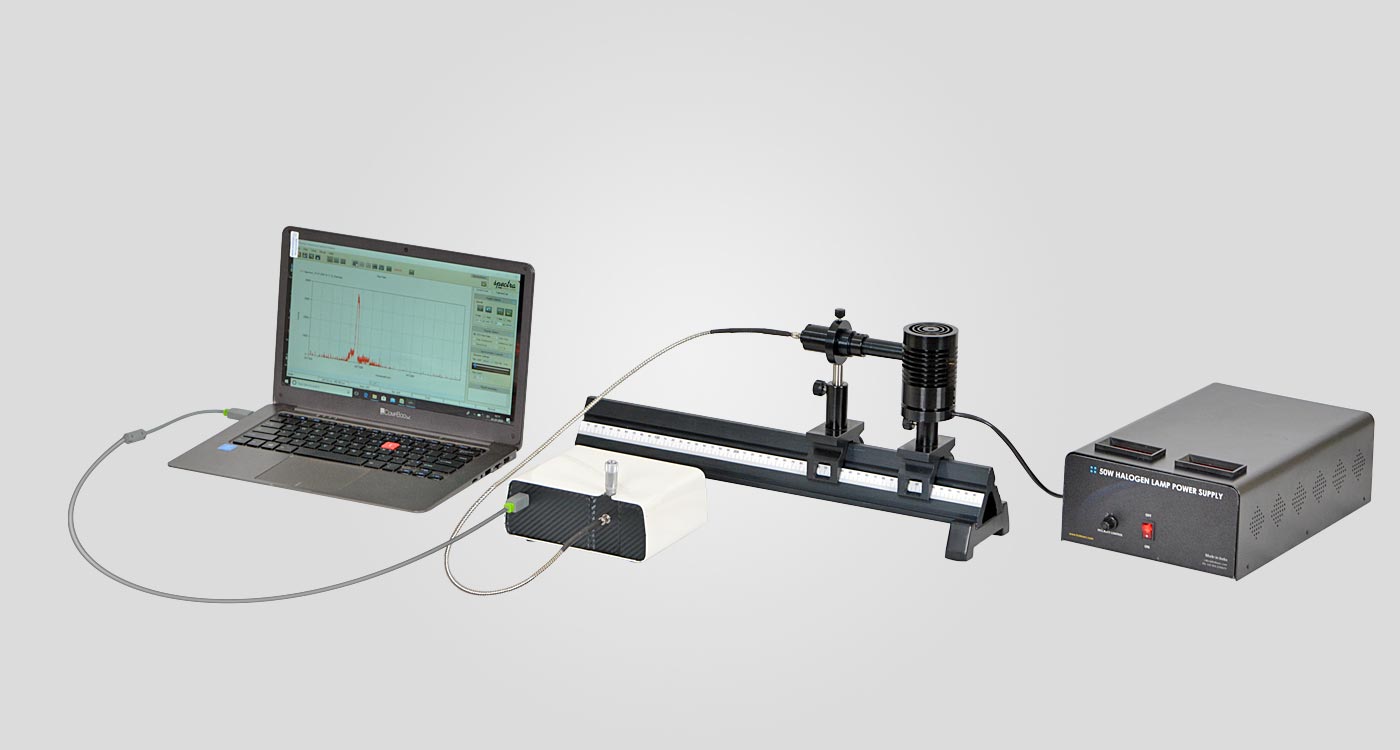
HOLMARC’s Experiment setup for estimating "Temperature of an Artificial Star by Photometry", helps us to find the surface temperature of a tungsten halogen lamp. And also a demonstration of the Wein’s displacement law which says that “As the temperature of a star increases, the peak of its continuous spectrum shifts to shorter (bluer)”. We can study the wavelength shifting in the spectrum of a halogen lamp as the surface temperature of the lamp varies. We are going through the following two experiments using our setup Model HO-ED-AAP-TAS.
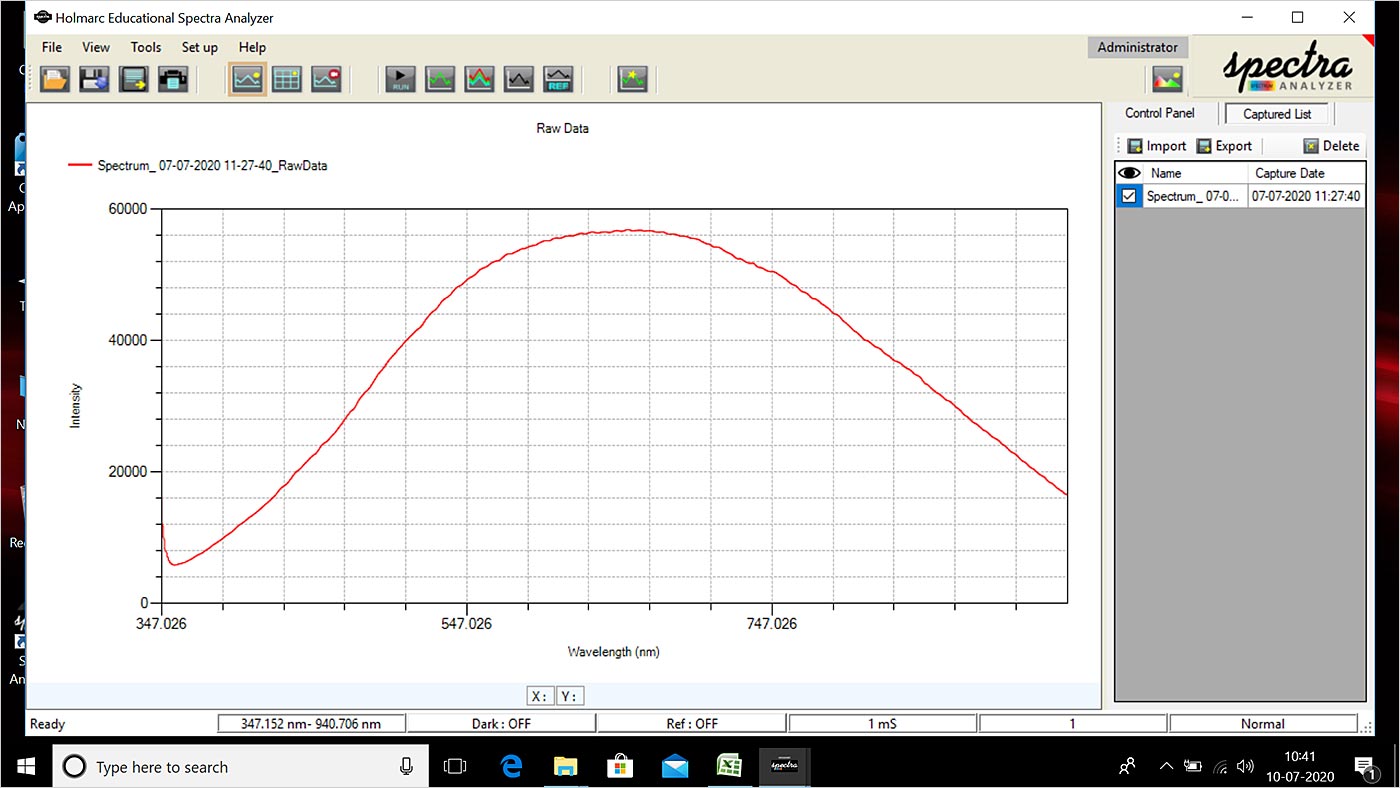
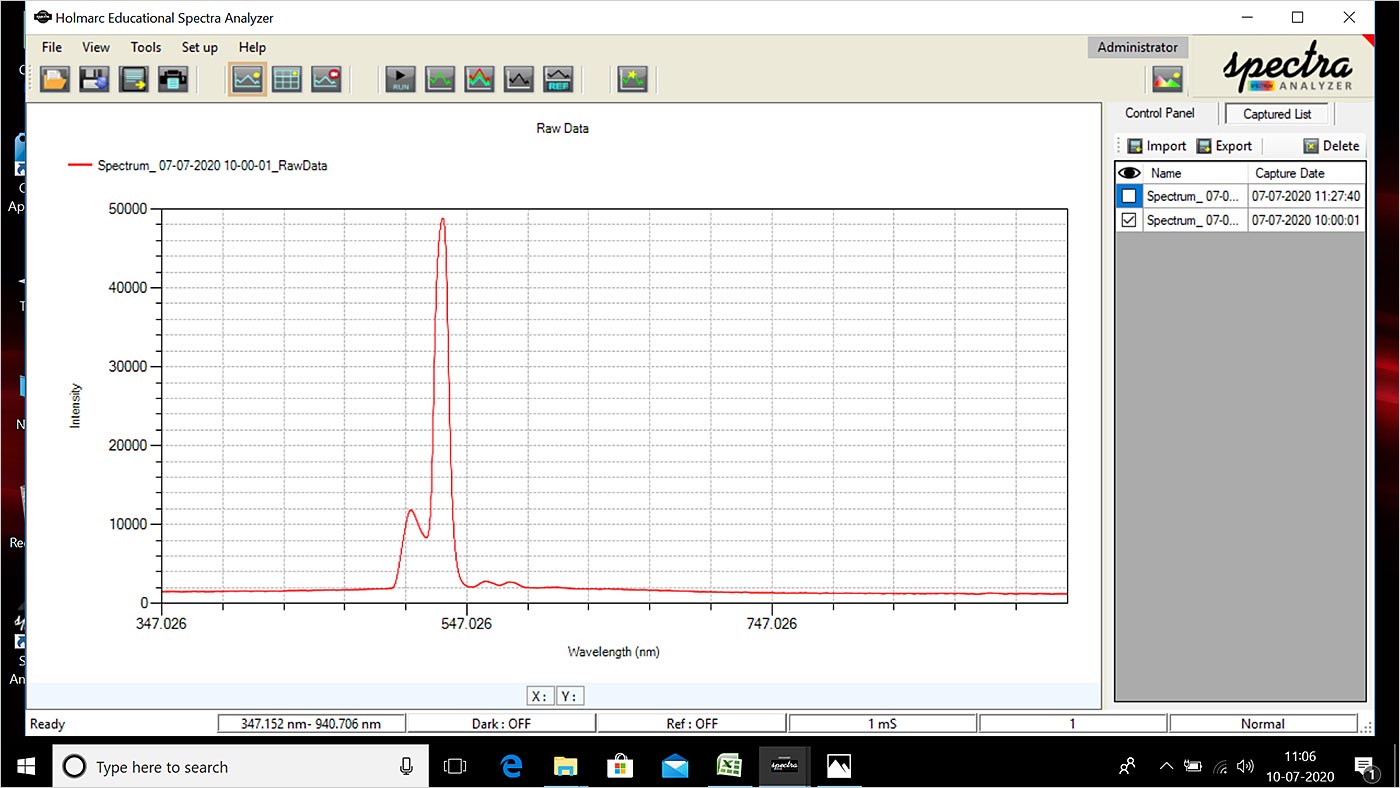
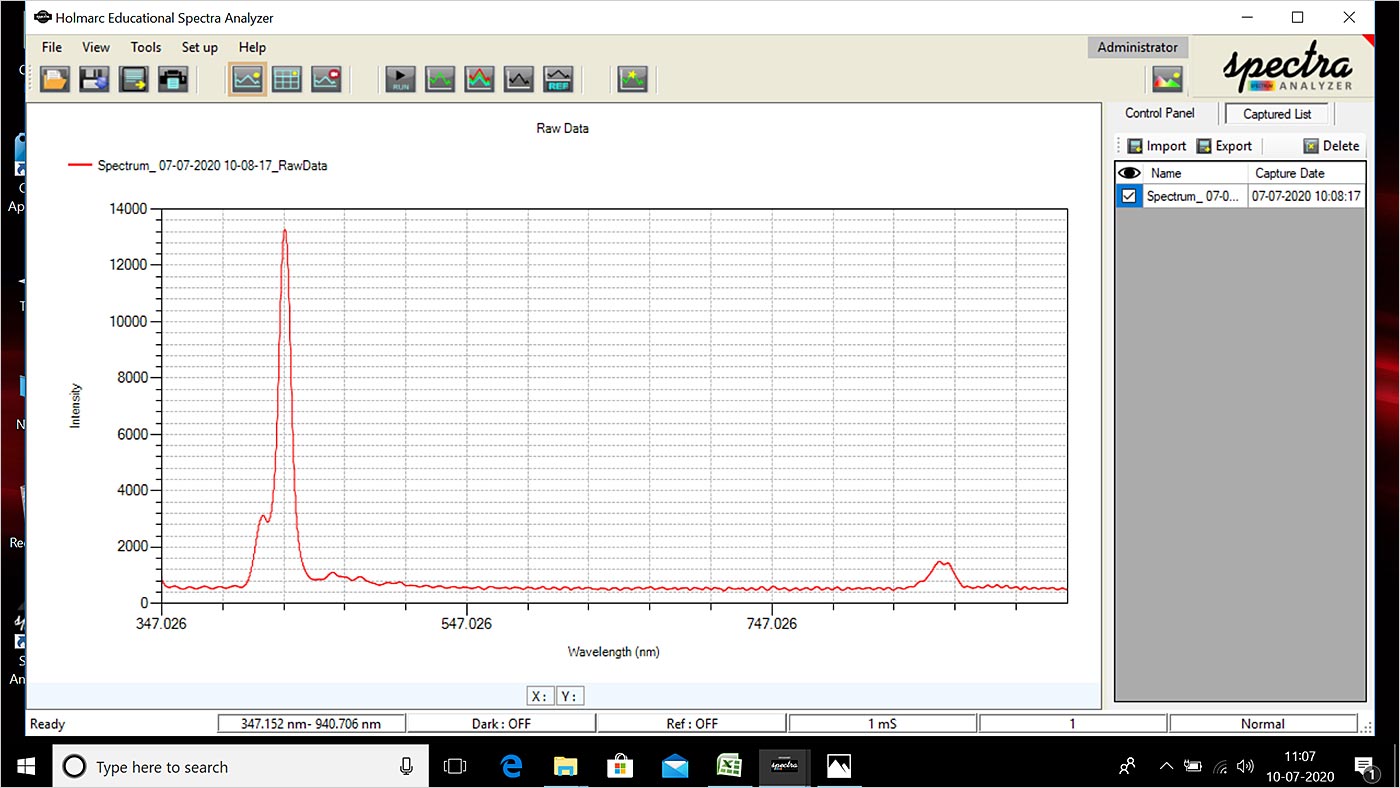
A black body can be defined as an object which absorbs and emits all frequencies of radiation. When it isat thermal equilibrium it is a perfect emitter. But the emitted light is not at the same frequency since the light was initially absorbed rather it will be distributed between different frequencies forming a ‘blackbody spectrum’. The characterization studies of a blackbody spectrum have gone through different mile stones such as Rayleigh - Jean’s law, Wein’s displacement law and at last the Planck’s law. It is interesting to study the relationship between the intensity of the blackbody spectrum with temperature.
We can make use of a Tungsten Halogen lamp for creating a blackbody spectrum. The usage of tungsten Halogen lamp is because we get smooth and stable spectrum output, and is useful in both visible and near infrared (NIR) region. Therefore we can have a demonstration to Wein’s displacement law using the tungsten halogen lamp spectrum, the total radiation output increases like the fourth power of the material temperature.
As the temperature of the tungsten increases the curve moves towards shorter temperature. We can change the temperature of thetungsten by changing the voltage applied to the lamp.
Our apparatus include a tungsten halogen lamp with power supply as theblackbody radiation source and the spectrum of the source can be obtained by integrating it with a CCD based concave grating spectrometer. We can make use of the spectra analyzer software to obtain the spectrum at a particular temperature.
To increase the temperature of tungsten filament in the lamp, increase the current flowing through the filament (by changing the voltage) with thepower supply. Obtain the spectrum at another temperature, you can find the shift of the higher intense peak to a shorter wavelength. This instrument is better useful as an educational apparatus, to demonstrate the laws related with the blackbody radiation.
Scope of Supply

Model No: ED-AAP-TAS-OR
Length : 500 mm
Material : Aluminum alloy
Finish : Black anodized
Quantity : 1 no.

Model No: ED-AAP-TAS-CL
Lamp : Quartz halogen
Focal length : 150 mm
Diameter : 50 mm
Quantity : 1 no.
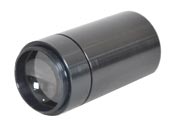
Model No: ED-AAP-TAS-OA
Material : BK7 or equivalent
Diameter : 25 mm
Tolerance : + 0.0, - 0.2 mm
Quantity : 1 no.
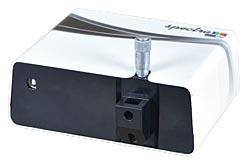
Model No: ED-AAP-TAS-CDS
Wavelength : 380 - 1050 nm
Stray light : <0.06% @ 532 nm
Integration Time : 0.1 to 6500 ms
Quantity : 1 no.

Model No: ED-AAP-TASMMOF
Fiber Diameter : 1 mm
Length : 1 m
Quantity : 1 no.

Model No: ED-AAP-TAS-CF
B ( Blue, 430 nm )
V ( Visible, 530 nm )
Quantity : 1 no.

Established in 1993, Holmarc Opto-Mechatronics Ltd manufactures variety of scientific and engineering instruments for research, industry and education.
ISO 9001:2015 Made in INDIA
CIN : L33125KL1993PLC006984
GST No : 32AAACH9492C1ZQ
Navigation
Get in Touch
B.7., H.M.T. Industrial Estate
H.M.T. P.O, Kalamassery, Kochi
Kerala, India - 683 503
+91 920-719-7772 / 6 / 1
sales@holmarc.com
Mon - Sat : 9 am to 5 pm
Investor Zone # Online Dispute Resolution
 Print
Print